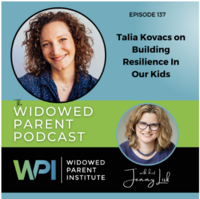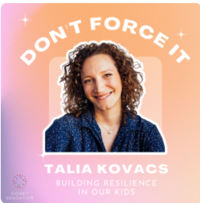
I was the oldest of four girls in a loud house — we moved six times before I hit fourth grade, Both of my parents were raised by traumatized Holocaust survivors, and neither of them had any ability to feel into their own emotions. They were good parents who loved their kids and had no idea what to do with me. I nearly failed out of high school at 15.
Every day, I saw how my parents tensed up when I got upset. How they signed in resignation when I walked into the room. How I was constantly on playdates, so they could catch a break. They worried that I would be the reason that we had to leave the restaurant early, or not make our plans on a Saturday morning, or run out of a friend's house because I had caused a scene I was labeled a bad kid. For a long time, I believed it.
I became a teacher because I wanted to reach the bad kids, like me. I got a master's in education, worked in classrooms, became a literacy specialist, eventually worked my way up to run an international education consulting firm. I spent years watching which kids bent under pressure and which ones bounced back — and I got obsessed with understanding why.
Then, grief hit in a way I wasn't prepared for. My mom died. My grandmother died. I had several miscarriages. All in a short stretch of years, while running a company and trying to hold my life together. I had to learn resilience not as a concept but as something I built, piece by piece, from scratch. What came out of that — the research, the rebuilding, the hard daily practice of it — became the foundation of everything I now teach to parents.
Here's what I've come to believe: the problem isn't your kid. The problem is that nobody gave you a real framework. Not scripts. Not a feelings journal. A framework. The kind built from a decade in classrooms, a master's in education, and the specific felt sense of resilience that only comes from having to rebuild yourself after real loss.
I also believe we've overcorrected as a culture. You can hold space for your kid's big feelings and hold the line. Boundaries aren't the opposite of warmth. Structure is how kids feel safe. And the fastest way to shift what's happening with your child is to start with you — your patterns, your triggers, what you're bringing into the room.
That's where we always start. You need to feel like you again. Feel good in your body, feel delight in your kids, and like your life. Because you deserve it, and because your kids do too.
I work with parents of elementary-age kids who know things could be calmer at home — who are losing their temper more than they want to, and who suspect their child is more capable than the daily meltdowns suggest.
They're right. And if that's you — welcome. You've found the right place.

I was the reason my parents fought.
At least, that's what it felt like growing up.
Raise Resilient Kids | Navigate Screentime | Stop Tantrums In Their Tracks |
Foster Positive Sibling Dynamics | Stop Yelling at Home
Talia's work has been featured in: